Journey to the Source – 2024

In May 2024, Australian Monjin; Wynton and Glen travelled to Kumamoto for two weeks of intensive training under the tutelage of Soke Uhehara Eriko and the Shihan Yamamoto Takahiro joined by Markus, a Monjin from Austria along with two Japanese Monjin – Shinagawa-san from Hiroshima as well as Fukanaga-san from Saga branches.

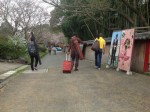
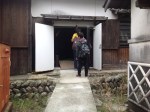
Over these two weeks, the group travelled across Kyushu to conduct Keiko (training) as well as cultural education as part of their progression within Taisha Ryu. This included visits to historical site, religious temples and shrines. Such as the Nabeshima castle (once home to a significant branch of Taisha Ryu, as written about in Kaichu: Unravelling the Cords), the Hosokawa Clan family Temple, where Maria Gracias and Todaoki whom are the inspiration to the characters Mariko and Buntaro in the book Shogun, recently made into a TV series. Also, the final resting place for Miyomoto Musashi, interestingly Musashi’s grave has a pagoda which is usually mounted with limestone of the Five Elements: Earth, Water, Fire, Air & Void. However, because Musashi’s soul was never quenched he had “Double Fire” elements on his grave!!

Throughout the training period, the group were reviewing and refining lessons learned as well as deepening their understanding of the hidden meanings to a lot of the true messenges and meanings hidden within the teachings from Marume Kurando’s curriculum. One finds that the deeper one learns the kata new information is revealed. It is this, that is a significant part of the journey for Koryu and Taisha Ryū.

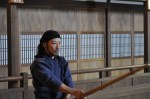
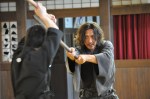
As the training moved along, the group deepened their Odachi (long sword with bokken) and also started to view the kata within the combative application of the katana. This new exposure led into revision of Battojutsu (drawing of the sword) and Noto (returning the sword to saya/scabbard) in the Taisha-ryūway. These movements are hard to see with the untrained eye as what makes Taisha Ryū different is its employment of body control. Though it may look like we are cutting with a sword, we are really cutting with our body, the weapon just happens to be there at the time. This is technique that must be taught in fine detail to be learned over a period of time with training and practice and cannot be mimicked.

Over the next few days we covered Kodachi (short sword) revision and managed to have some new fun with archery before preparing for our performance (embu) in Hitoyoshi, where Taisha-Ryū was founded in 1571. As the training closed, the end the group slowly began to break away and our goodbye’s were all said. One thing that is true with the Taisha-Ryū family, regardless of geography or cultural background there is a bond we share that is unique and valued by all.


Training with the Hizenhyohotaisharyu keikokai ( Taisha-ryu Saga study group)

image

When I first had the chance to see and practice with the Taisha-ryu in Yatsushiro in October 2012 there were less than twenty members. In April 2014, when I was accepted as a member I became member 36. There are now over sixty of us, most of whom are members of one of the three keikokai (study groups) in Japan. In the three keikokai outside Japan, there are just the two of us in Sydney, four in Italy and a few in Hong Kong.

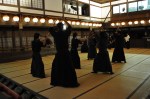
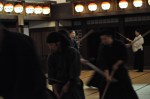
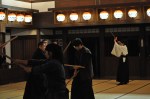
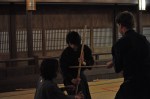
Yamamoto-sensei and the shihandai regularly visit the three keikokai in Japan. I was fortunate enough to be invited to come with Yamamoto-sensei and Uehara-sensei to the Saga keikokai while I was in Yatsushiro two weeks ago. It was most interesting for a number of reasons – firstly, they have a unique dojo located in a theatre in a Ninja theme park called the Hizen Yumekaido, a space they can use because a few of them work there and also because both the parks owner and the local government support the study of Taisha-ryu because it was the style used by the Saga samurai in the Tokugawa period (1603-1868) and they are keen to see the revival of its practice in the area.

The training shown in the photos was held the Friday before last and was divided into two parts – from 3:00- 6:00pm was Tankeshuchuutanren or intensive training with just a few members, and then from 7:00-9:00pm was the Teireikeiko or regular practice. For this we were privileged to have Sato-shihandai join to help teach after having driven over four hours from Kagoshima to attend the evening two-hour session.

I was very surprised to see how many members they have in Saga and was most impressed with their seriousness and enthusiasm. Hopefully we can create a similar situation in Australia.

Click on photos to enlarge,

Posted by David- 36号

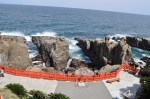
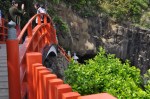
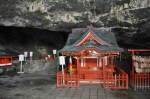
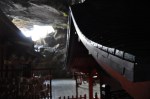
Udo Jingu – some photos

There are, or once were, hundreds of ryu-ha (styles or schools) of kenjutsu in Japan, most of which are descended from only  three that were created during  the sengoku-jidai (age of a country at war): The Shinto-ryu – founded c.1450, the Kage-ryu – founded c. 1490  and the Itto-ryu – founded c.late 1500’s.

The first and oldest of the three is the Shinto-ryu – full name: Tenshin Shoden Katori Shinto-ryu (天真正伝香神道流) founded by Iizasa Yamashiro no kami Choisai (1387-1488)* and is still in existence.

The second, the  Kage-ryu (陰流) which Kamiizumi Ise no Kami Nobutsuna mastered and from which he created his own version which he called the Shinkage-ryu (新陰流)meaning New Kage-ryu from which many well known ryu-ha sprang including the Yagyu-Shinkage-ryu as well as our style, the  Taisha-ryu, was created by Aisu Ikkosai (1452-1538).

Aisu Ikkosai was from Ise province and is said to have been a pirate as well as a trader whose business/piracy saw him travelling to many parts of Japan and as far away as China where coastal towns were raided by Japanese pirates known as wakou (倭寇ーわこう).   Not much is known for certain, but somehow, perhaps he was taught ,or maybe through trial and error on the job he became an adept swordsman but like many masters of his time he sought a deeper understanding of the nature of the sword and looked for divine revelation.

At the age of 36, in 1488, he came to the remote Udo Jingu in the province of Hyuga on the East coast of Kyushu to seek guidance from the gods. The shrine, located on the beautiful Nichinan coast, is in a cave battered by wave after wave from the ocean, and it was here that in a dream the kami appeared to him in the form of a monkey and imparted the secrets of the warrior arts with which he created the Kage-ryu.

When in Kyushu,  Udo Jingu is one of many places in Miyazaki Prefecture worth a visit.

Click on photos to enlarge.

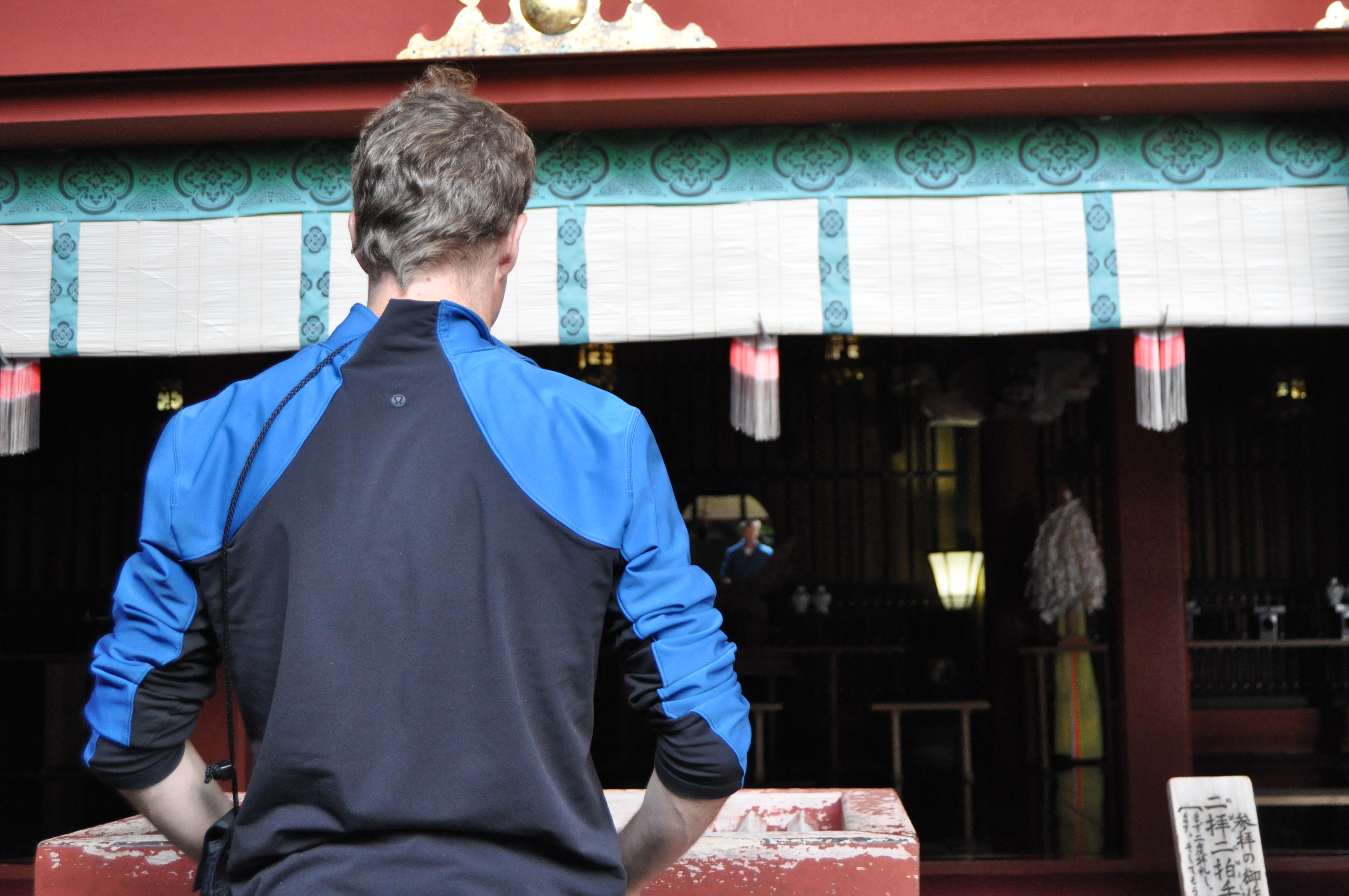
When you stand before the alter inside the cave at Udo Jingu you see your reflection in the holy kagami (mirror)

When you stand before the alter inside the cave at Udo Jingu you see your reflection in the holy kagami (mirror) looking back at you.

*No, that’s not a typo. He lived to be over 100 years old.

Sources and further reading:

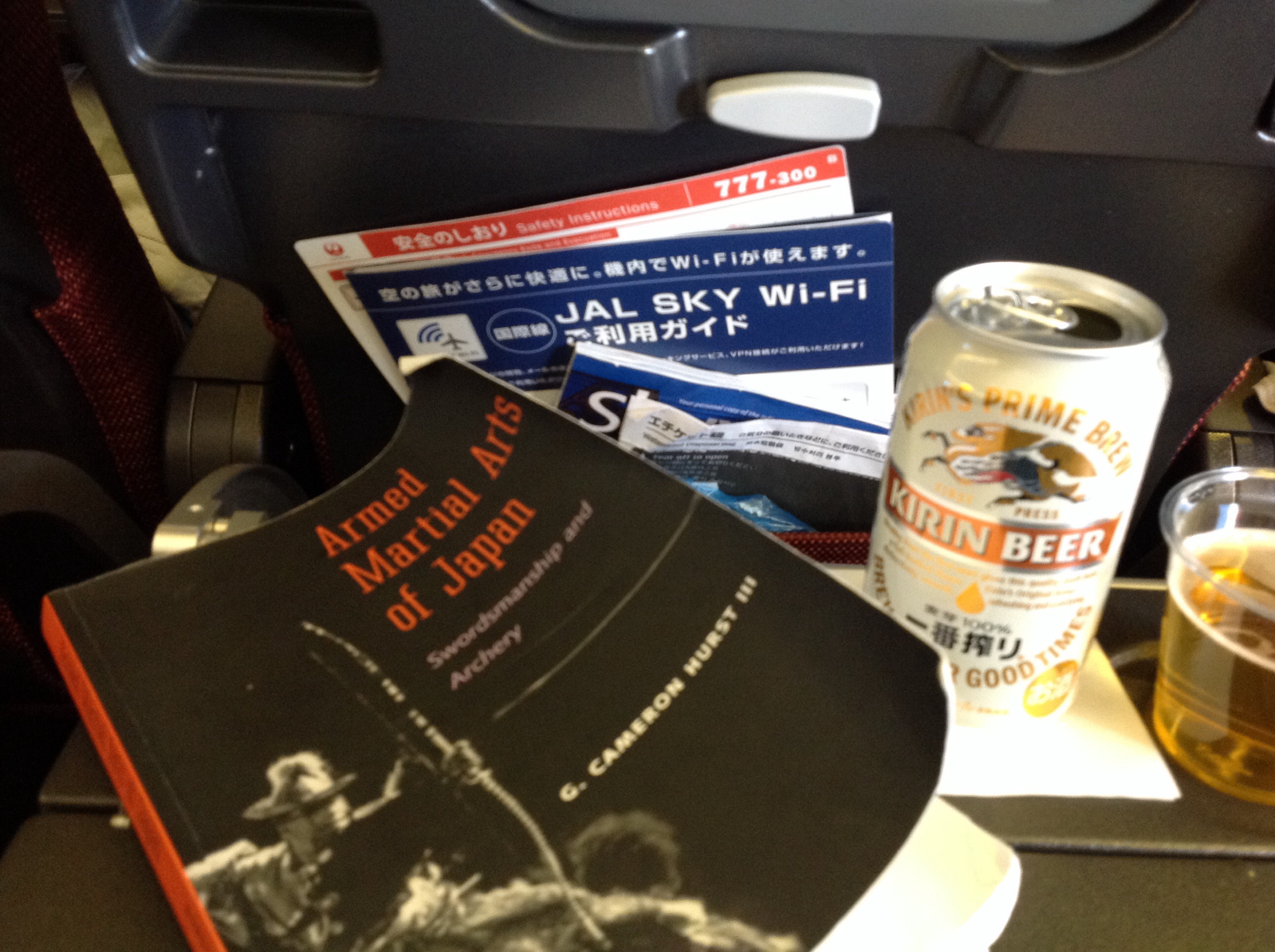
Hurst, G. Cameron, III. Armed Martial Arts of Japan, Yale University Press, 1998

Friday, Karl F. The Kashima-shinryu and Samurai Martial Culture, University of Hawaii Press, 1997

Posted by David – 36号 逞毘道